Getting Around Da Nang: Grab, Xanh SM, Buses, Trains and the One Taxi Scam
Two apps solve this city: Grab and Xanh SM, the teal VinFast electric fleet that prices at or below Grab and is consistently better reviewed. A GrabBike is 20,000–35,000₫ for a 5km hop and a GrabCar 60,000–90,000₫, quoted before you get in. Street-hailed taxis with rigged meters around Han Market and the airport rank are the one persistent scam here; Vinasun and Mai Linh are the metered brands worth flagging if you have no data. City buses are 8,000₫ flat but Vietnamese-only and finished by about 18:00. There is no metro and nothing is under construction.
Use Grab or Xanh SM, and never hail a taxi on the street
Use Grab or Xanh SM, never a street-hailed taxi. Rigged, fast-ticking meters around Han Market and the airport rank are the one scam that comes up in every single forum thread about this city. Both apps quote the fare before you get in: GrabBike runs 20,000–35,000₫ for a 5km hop, GrabCar 60,000–90,000₫. Xanh SM is the electric VinFast fleet, priced at or below Grab and consistently better reviewed. Vinasun and Mai Linh are the two metered brands worth flagging on the street if you have no data.
The Reddit version of this advice, repeated for years: get in, say xin chào, get out again without ever having a conversation about money. That is what the apps buy you — the fare is fixed before the door closes, the route is on a map, and there is a record of the trip. It is also why the cost of moving around this city is genuinely trivial: almost every journey inside Da Nang is under 100,000₫ (about $4).
Xanh SM deserves the specific recommendation. It is VinFast's electric fleet, painted teal, launched nationally in 2023, and it prices at or below Grab on most routes with noticeably better cars and drivers. Install both apps and check both — they undercut each other unpredictably. Neither needs a Vietnamese bank card; both take foreign cards or cash.
How to move around Da Nang, priced
Fares checked August 2026 at 25,500₫ to the dollar. Distances assume the coast road, which is flat and fast outside the 17:00–19:00 crush.
| How | What it costs | What it is good for | Verdict |
|---|---|---|---|
| GrabBike / Xanh SM Bike | 20,000–35,000₫ per 5km | The default for one person going anywhere in the city. Fast through traffic, helmet supplied, and about a dollar. Not ideal in monsoon rain or with luggage. | WORTH IT |
| GrabCar / Xanh SM Taxi | 60,000–90,000₫ per 5km | Two or more people, luggage, rain, or anything after a few drinks. Add a 30,000₫ airport surcharge on pickups from DAD. Xanh SM's electric cars are the better ride at the same money. | WORTH IT |
| Vinasun and Mai Linh taxis | Metered | The two brands worth flagging on the street if your phone is dead. Genuine meters, national companies. Still slower and dearer than the apps, and you have no fare quote up front. | DEPENDS |
| Any other street-hailed taxi | Whatever the meter says | The one persistent scam in this city: fast-ticking meters around Han Market, the airport rank and the beach hotel strip. There is no upside — the apps are cheaper and quote first. | SKIP |
| DanaBus city buses | 8,000₫ flat (~$0.30) | Cheap, clean and almost unusable as a visitor: Vietnamese-only signage and announcements, and services finish around 18:00. Worth it if you enjoy the puzzle, pointless if you are on a three-day trip. | DEPENDS |
| Bus No. 1 to Hoi An | about 30,000₫ (~$1.20) | The yellow bus, every 20–30 minutes, 05:30–17:50, 40–55 minutes to the Old Town. Ten times cheaper than a Grab for the same trip and the single best-value transport decision in the region. Detail in the Hoi An day trip guide. | WORTH IT |
| Grab or private car to Hoi An | 250,000–350,000₫ | Door to door in 40–55 minutes, worth it for families, late returns and anyone travelling with luggage. Tourist shuttles sit in between at roughly 120,000–250,000₫. | DEPENDS |
| Train to Hue | 90,000–250,000₫ · 2h48 | Four or more departures a day on the Reunification Line, and the stretch over the Hai Van Pass is one of Asia's great short rides. Book a seat on the sea side. A tourist heritage-train ticket runs from about $24. | WORTH IT |
| Rented scooter | 120,000–150,000₫/day · $40–60/mo | Total freedom, and probably illegal for you. Vietnam recognises only 1968-convention IDPs — most Western permits are 1949 issues and invalid, which voids your travel insurance in a crash. Read the licence trap before you rent anything. | DEPENDS |
| Walking | Free | Genuinely poor outside three zones. Sidewalks across most of the city are parked full of motorbikes, so you walk in the road. The beach promenade, the Bach Dang riverfront and the An Thuong grid are the only real pedestrian areas. | DEPENDS |
Grab and Xanh SM fares are dynamic — these are the typical bands, not quotes. Both apps show the price before you confirm, which is the entire point of using them.
Da Nang is not a walking city, with three exceptions
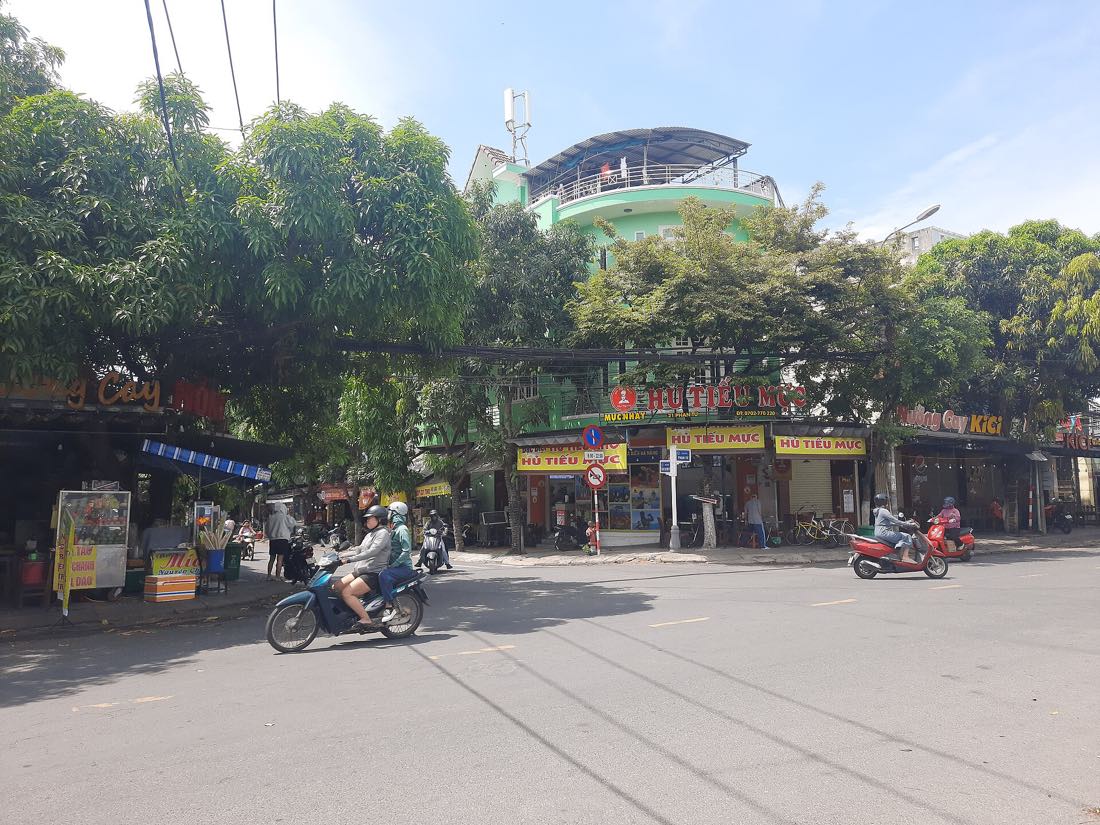
This is the complaint that comes up in every resident thread, and it is fair: the sidewalks exist but they are full of parked motorbikes, so pedestrians end up in the traffic lane.
The three places where walking genuinely works:
The beach promenade. A continuous paved path running the length of the sand from Son Tra down past My Khe and on towards Non Nuoc. Exercise stations, cafés, and the whole city out on it at 05:30 and again after 17:00.
The Bach Dang riverfront in Hai Chau. Wide, landscaped, bar and restaurant frontage at the north end, and the Dragon Bridge in the middle of it. The best evening walk in the city.
The An Thuong grid. Six to eight blocks of numbered alleys behind the beach, dense with cafés, bars, restaurants and massage shops, and the only neighbourhood where you can genuinely live without transport.
Everywhere else, budget a 20,000₫ GrabBike rather than a 15-minute walk. Crossing roads is its own skill: walk at a constant, predictable speed and let the scooters flow around you. Stopping suddenly in the middle is the thing that causes accidents.
The scooter question, in short
The full version, including the enforcement map and the legal workarounds, is on the scooter rental page. The short version is that most visitors cannot legally ride here, and most do anyway without understanding what it costs them.
Vietnam recognises only 1968 Vienna Convention international driving permits. The permits issued in the United States, the UK, Australia, Canada and Ireland are 1949 Geneva permits and are not valid here. Riding anything over 50cc on one is illegal.
1–2 million₫ and the bike impoundedThis is the part that actually matters. Crash while riding illegally and most policies will not pay — and traffic is the number one danger in this city, with fatalities on the Son Tra loop and the Hai Van Pass every year. Serious treatment means a flight to Ho Chi Minh City or Bangkok.
The entire hospital billDa Nang runs more checkpoints than most Vietnamese beach towns, with regular stops on Vo Nguyen Giap, the river bridges and the Hai Van approach. Helmets are non-negotiable and are checked.
Helmet fines on topA 50cc scooter or an e-scooter needs no licence at all and covers the coast road perfectly well. Longer term, you can convert a home licence once you hold a residence card. And for the two roads people actually want a bike for — Son Tra and Hai Van — a guided jeep or easy-rider trip is safer, legal and not much more expensive.
The Reunification Line, and the best 2h48 in Vietnam
Da Nang station sits about 3km west of the river in Thanh Khe, and the north–south Reunification Line runs through it. The journey worth taking is Da Nang to Hue: four or more departures a day, 2 hours 48 minutes, 90,000–250,000₫ (about $3.50–10) depending on the seat class.
The reason to do it is the middle hour. The line climbs the seaward side of the Hai Van Pass on a ledge above the water, through tunnels and past Lang Co lagoon, and it is one of the great short train rides in Asia — better than the road, because you can actually look at it. Sit on the right-hand side heading north. There is also a packaged heritage-train ticket from about $24 and a full Hue day trip by train and bus at around $49, which is the best-reviewed format in the region.
Southbound the line continues towards Quang Ngai and eventually Ho Chi Minh City, but for Hoi An it is useless — there is no station there. Use Bus No. 1 or a Grab.
There is no metro in Da Nang, and nothing is being built
Worth stating plainly, because a lot of content implies otherwise. Nothing rail-based has been built inside the city and nothing is under construction. What exists is a set of proposals: a Da Nang–Hoi An urban railway of roughly 30km and about 20 minutes, floated as a public-private project "by 2030", plus 2 MRT and 11 LRT lines that exist only on paper.
A national north–south high-speed line was approved in 2024 at roughly $67 billion and would stop here, but the realistic horizon for that is the 2030s at the earliest. Treat every date attached to any of these sceptically — Vietnamese infrastructure announcements and Vietnamese infrastructure delivery are two different subjects. Plan your trip on Grab, buses and the existing Reunification Line, which all work today.
Getting around, practically
Transfers, shuttles and the trips worth handing over
Three journeys in this region are worth pre-booking rather than improvising: the airport run with luggage, the Hoi An hop if you are not taking the 30,000₫ bus, and anything crossing the Hai Van Pass.
Getting around Da Nang FAQ
Is Grab available in Da Nang?
Yes, and it is the default way to move around. A GrabBike is 20,000–35,000₫ for a 5km hop and a GrabCar 60,000–90,000₫, with a 30,000₫ surcharge on airport pickups. Xanh SM, the teal VinFast electric fleet, prices at or below Grab and is worth installing alongside it — the two undercut each other unpredictably.
Are taxis in Da Nang safe?
The apps are. Street-hailed taxis are the one persistent scam in this city, with rigged fast-ticking meters around Han Market, the airport rank and the beach hotel strip. If your phone is dead, Vinasun and Mai Linh are the two metered brands worth flagging. Otherwise use Grab or Xanh SM.
How do you get from Da Nang to Hoi An?
Bus No. 1 for about 30,000₫, every 20–30 minutes between 05:30 and 17:50, taking 40–55 minutes. A Grab or private car does the same run door to door for 250,000–350,000₫, and tourist shuttles sit between the two at 120,000–250,000₫. There is no train to Hoi An.
Is Da Nang walkable?
Barely. Sidewalks across most of the city are parked full of motorbikes, so pedestrians walk in the road. The exceptions are the beach promenade, the Bach Dang riverfront and the An Thuong grid — those three are genuinely pleasant. Everywhere else, take a 20,000₫ GrabBike.
Does Da Nang have a metro?
No, and nothing is under construction. A Da Nang–Hoi An urban railway of about 30km is proposed as a public-private project "by 2030", and two MRT plus eleven LRT lines exist on paper. Treat every date attached to them sceptically. The only rail that works today is the Reunification Line to Hue.
How much is the bus in Da Nang?
DanaBus city services are 8,000₫ flat, about $0.30. The catch is that signage and announcements are Vietnamese-only and services finish around 18:00, which makes them impractical for most visitors. The one route worth learning is Bus No. 1 to Hoi An at about 30,000₫.
Should I rent a scooter in Da Nang?
Probably not. Vietnam recognises only 1968-convention international driving permits, and the permits issued in the US, UK, Australia, Canada and Ireland are 1949 issues that are invalid here — which means riding over 50cc is illegal and your travel insurance is void in a crash. A 50cc or e-scooter needs no licence. Full detail on the scooter page.
How long is the train from Da Nang to Hue?
2 hours 48 minutes, with four or more departures a day and fares of 90,000–250,000₫ depending on class. The middle hour crosses the Hai Van Pass on a ledge above the sea and is one of the best short train rides in Asia. Sit on the sea side heading north.